
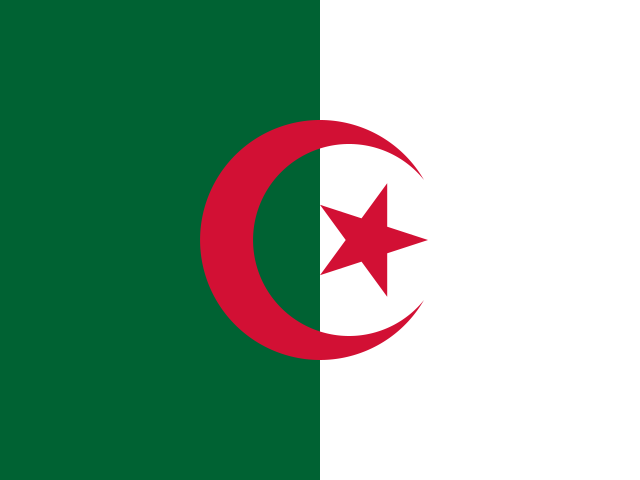
 Algeria
Algiers: a white city of hills, history and the Mediterranean
Algiers spreads across hills descending towards a broad Mediterranean bay. From the sea, the city appears as an accumulation of white façades, terraces, domes and layered balconies. Light catches the pale stone and turns the whole into a bright silhouette, giving rise to its familiar image as the white city. Closer up, that order becomes a far more complex web of avenues, stairways, neighbourhoods, markets and constantly changing slopes.
The Algerian capital contains Phoenician, Roman, Amazigh, Ottoman, French and contemporary layers. They do not occupy perfectly separate districts. The Casbah preserves palaces, mosques and traditional homes; waterfront avenues display nineteenth-century European architecture; modern neighbourhoods extend across the heights. Trams, buses, cars and pedestrians move between them, creating an intense, youthful city in permanent motion.
The Casbah
The Casbah occupies a steep hillside above the harbour. Narrow streets, stairs, passageways and whitewashed houses form a pedestrian labyrinth. Traditional homes gather around interior courtyards that bring light, ventilation and privacy.
Mosques, fountains, ovens, workshops and small shops appear between white walls and decorated doors. The pattern reflects centuries of adaptation to terrain, climate and community life. For children, the Casbah can feel like a vertical city filled with turns, steps and sudden views of the sea.
The district was also central to the struggle for Algerian independence. Its difficult lanes provided space for organisation and resistance. Memories of conflict remain attached to homes, squares and family stories.
Palaces and Ottoman architecture
During Ottoman rule, Algiers was a major port city. Palaces such as Dar Hassan Pacha and Dar Mustapha Pacha preserve courtyards, tiles, columns and woodwork revealing refined architecture adapted to the Mediterranean climate.
The Palace of the Raïs, known as Bastion 23, brings together several waterfront residences. Terraces and courtyards suggest the relationship between the urban elite, harbour and maritime routes.
Historic mosques introduce minarets, domes and prayer halls into the compact fabric. Religious and domestic architecture share the use of courtyards, shade, water and decorative materials.
The waterfront
Avenues built during French colonial rule changed the relationship between city and harbour. Arcaded buildings, iron balconies and decorated façades form a long urban edge facing the Mediterranean.
Martyrs’ Square and surrounding streets show archaeological remains, Ottoman architecture and colonial planning layered together. The harbour remains a place of economic activity and connection with other Mediterranean cities.
Ferries, fishing boats and large vessels belong to the view. For families, the sea acts as a constant reference and a way to understand the commercial and strategic origins of Algiers.
Notre-Dame d’Afrique and views across the bay
Notre-Dame d’Afrique rises on a hill west of the centre. Its dome and arches combine European and North African influences, while the terrace opens a broad view across the sea.
The building recalls the city’s religious and historical diversity. Its location shows how Algiers adapts to slopes and how districts extend along the coast.
Gardens and green spaces
The Jardin d’Essai at Hamma contains palms, figs, bamboo, tropical plants and ordered avenues. Created in the nineteenth century, it combines a geometric French garden with more exuberant sections.
Shaded paths, ponds and mature trees contrast sharply with urban traffic. For children, the garden turns botany into a sensory experience of leaves, roots, water and birds.
Maqam Echahid rises nearby. Its large concrete forms commemorate those who died during the independence war and dominate part of the skyline.
Museums and memory
The Bardo National Museum occupies a historic villa and holds prehistoric and ethnographic collections. Objects, textiles, tools and archaeological material display Algeria’s cultural diversity.
The National Museum of Antiquities and Islamic Art broadens the story through ceramics, manuscripts, coins and objects from different periods. These collections show Algiers within a much wider North African history.
Memories of colonisation and the independence war appear in museums, monuments and urban narratives. For families with older children, these places connect major historical processes with personal and community experience.
Markets and daily life
Algiers markets gather fruit, vegetables, fish, spices, olives, bread and household products. Noise, conversation and colour reveal a city organising much of daily life around local trade.
In the Casbah and other districts, bakeries, cafés and small workshops retain a family scale. Coffee and tea accompany long conversations as streets fill with students, workers and families.
Algerian food
Algiers cooking combines Amazigh, Arab, Ottoman, Mediterranean and French traditions. Couscous holds a central place, prepared with vegetables, meat and chickpeas. Chorba, tajines, bourek and many stews belong to the family table.
Fish and seafood reflect the Mediterranean. Sardines, bread, olives and salads accompany meals where spice adds aroma without hiding ingredients.
Sweets use honey, almonds, dates and orange blossom. Makrout, baklava and other pastries appear at celebrations and family gatherings. Food acts as hospitality and transmission between generations.
Music and popular culture
Algiers is closely associated with chaabi, an urban musical tradition developed in the Casbah. Its melodies, instruments and lyrics combine poetry, memory and everyday life.
Raï, Amazigh music, hip-hop and other contemporary forms also shape the soundscape. The city brings regional traditions from across Algeria together and transforms them within an urban environment.
A capital of contrasts
Algiers changes with height, district and hour. Central avenues can feel monumental; Casbah streets intimate and dense; gardens quiet; the port industrial and open to the sea.
The city remains memorable for its slopes and the constant relationship between architecture and the Mediterranean. White façades, courtyards, chaabi, the smell of bread and the bay beneath the hills form a capital where history, family life and landscape meet at every level.